
Tighten Flabby Arms With One Exercise
Tighten Flabby Arms With One Exercise, try this no-nonsense routine, set a timer, and track small wins as you feel your arms get stronger each week.
HEALTH & WELLNESS
Shari Smith
1/19/20267 min read
As an Amazon affiliate, we earn commissions at no extra cost to you if you click our links and make a purchase.
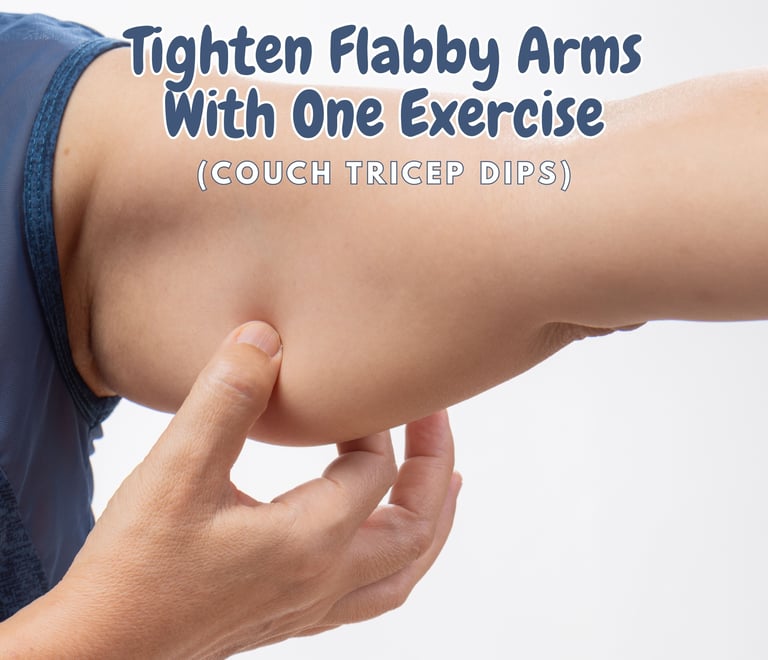
Flabby arms, also known as bat wings or bingo arms, can sneak up over the years.
One day you look in the mirror and notice the upper arm fat on the back of your upper arms looks softer, even if the rest of you feels fine.
The good news is that flabby arms are not just about skin. There’s muscle underneath, and you can train it.
This post walks you through one simple, do-at-home exercise that targets the triceps (the muscles on the back of your upper arms).
You’ll also get beginner, intermediate, and advanced options, plus a wall variation if you do not want to use a couch.
No gym, no fancy gear, and no complicated routine.

Tighten Your Flabby Arms with Just One Exercise! Dr. Mandell
Why flabby arms happen (and why triceps matter)
As people get older, the upper arms often lose firmness. Part of that is normal aging, part is loss of muscle, and part is extra body fat sitting under the skin. When the triceps are weak, the back of the arm can look less “held up,” even if you are not gaining a lot of weight.
Here’s the encouraging part: when you build muscle in the triceps, you give the arm more shape and support. As those muscles develop, muscle tone improves, and you can see less of that “flabby” look.
Another helpful point is that muscle burns energy. Triceps training is not just about looks. As you strengthen muscle, your metabolism increases due to the calorie-burning effects of lean tissue, which supports fat loss over time and shifts body composition toward more muscle and less fat.
Before the exercise: the two big things that affect arm fat
Training the triceps helps, but two basics make a big difference in whether you actually see the change.
1) A calorie deficit matters most for fat loss
If you eat too many calories (especially lots of carbs and excess calories overall), your body can store the extra as fat. More body fat often means more loose, soft areas (underlying fat, not loose skin), including the arms.
It can also mean more visceral fat, which is the fat stored deeper in the abdomen.
Aerobic exercise helps. Walking, swimming, and bike riding are all good choices. But fat loss still comes back to one simple idea: you need a calorie deficit.
2) Protein helps your muscles rebuild and look firmer
When you do resistance exercise, you break muscle down a bit. That’s normal. Your body repairs and rebuilds it stronger, but it needs building blocks to do that.
Those building blocks are amino acids from protein. Proper protein intake supports rebuilding lean tissue. If you are losing weight but not eating enough protein, it’s harder to build and keep muscle. That can make it tougher to get the “tightened” look you want in the arms.
Simple diet reminders that support tighter arms
No complicated plan is required to get started. These are effective nonsurgical methods for arm care, contrasting with options like brachioplasty, liposuction, or radiofrequency, as Dr. Alan Mandell highlights.
A nutrient-rich diet also promotes collagen production for improved skin health.
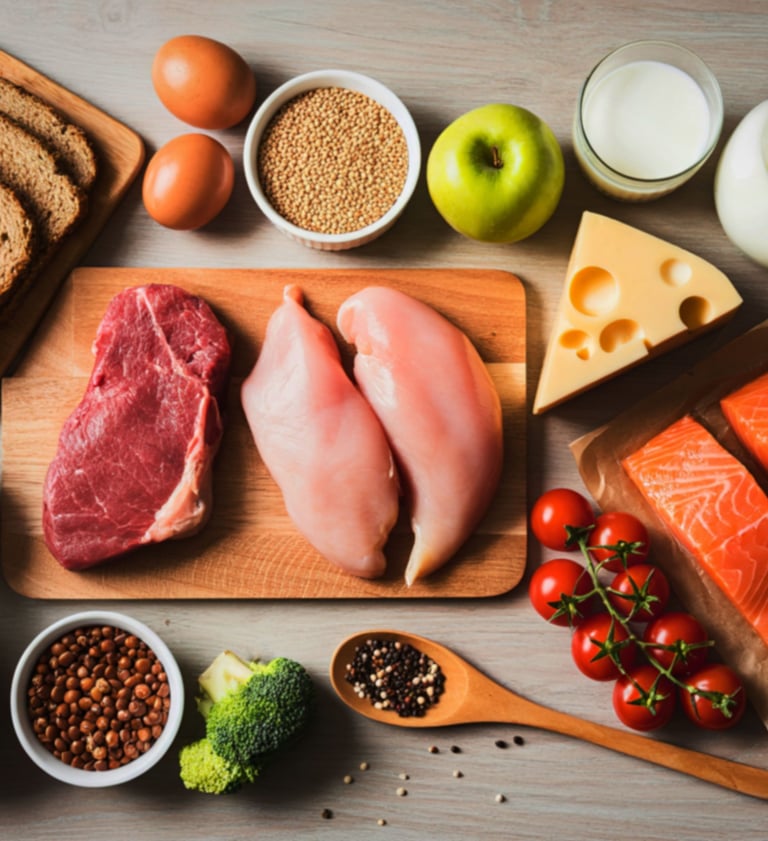
Focus on the basics:
Cut back on refined, processed foods.
Avoid trans fats.
Do not overdo saturated fats.
Eat more fruits and vegetables.
Add legumes if you like them.
Choose healthy proteins such as chicken, fish, or whatever meat you prefer.
Watch total calories, because excess calories can turn into body fat.
The one exercise: couch tricep dips (with levels)


Beginner option 1: lean-back couch push
This is a simple way to train the triceps without hanging off the couch.
SetupThe one exercise: couch tricep dips (with levels)
This is the main move: Tricep Dips done using a couch (or a sturdy sofa). As one of the best targeted arm exercises, the same exercise can be scaled for a true beginner or made tough enough for someone more advanced.
You’ll place your hands next to your thighs and use your arms to push your body, which creates resistance on the triceps in this strength training move.
A nice bonus is how practical it is. You can do this while watching TV or talking with family. You do not need weights, a coach, or a gym membership. You just need a stable surface.
How it should feel
You should feel the muscles on the back of your upper arm working. It can feel like a strong “squeeze” or like the arms are heating up. A little shaking is common when the muscle is working hard.
If you feel sharp pain, stop and adjust your position or reduce the range of motion.
Sit in the middle of the couch.
Put your hands on the couch next to your thighs.
Keep your feet on the floor for support.
Steps
Lean back until your elbows contact the back of the couch.
Your elbows bend as you lean back.
Push up as if you are getting up from the couch.
Straighten your arms, then bend again as you lean back.
Repeat the small push motion.
It’s a short movement, but it puts tension right where you want it.
Suggested plan (beginner starting point)
For sets and reps, aim for 12 to 15 repetitions. Try for 2 to 3 sets. Performing these consistently will help you build muscle. If you can only do 1 set, start there and build over time.
Beginner option 2: isometric triceps hold on the couch
Isometric means the muscle contracts hard without much movement. This is a great choice if dips feel too difficult.
Setup
Sit closer to the front edge of the couch.
Put your hands next to your body on the cushion.
Scoot slightly forward, but keep your buttocks on the couch.
What to do
Lean forward just enough to feel the triceps contract strongly and tighten flabby arms.
Hold that contraction for 15 to 20 seconds.
Rest a few seconds, then repeat.
You will know you found the right spot when you feel the triceps “fire” to keep you from lifting off the couch.
If 15 to 20 seconds is too hard
Hold 10 seconds. If that is too much, hold 5 seconds. Do your best and repeat it several times.
Intermediate option: off-the-couch hold or short dips
Once the beginner version feels easier, increase the challenge by shifting more body weight into your arms, similar to push-ups. This builds muscle tone for a more defined look.
Setup
Hands stay next to your body.
Scoot forward more until your buttocks come off the couch slightly.
Two ways to do it
Isometric focus: Hold the position off the couch.
You can hold for 10, 15, or 20 seconds, then come back up.
Moving reps: Lower for 3 to 4 seconds, then push back up.
Use your feet a little if you need help. The goal is to keep the triceps doing most of the work.
Slow movement makes it harder in a good way. You will feel the triceps tighten as you lower.
Advanced option: deeper couch tricep dips
For the advanced version, you go lower. More range of motion makes the exercise tougher because your triceps must control your body weight through a bigger part of the movement. This deep dip counts as one of the effective compound exercises for the upper body, unlike a shoulder press that primarily targets the shoulders.
Setup
Hands next to your sides.
Walk your feet farther forward.
Lower your body farther down.
How to perform it
Drop down into a deeper dip.
Hold the bottom for a couple seconds if you can.
Push up strongly to return to the start.
Repeat.
This level demands more push to get back up, and your triceps will feel it fast. Add longer holds at the bottom if you want more challenge.
No couch? Do wall triceps presses instead
If you have never done strength training, or you just want a simple way to incorporate daily movement anywhere, a wall works well.
Safety first: Wear shoes so you do not slip.
Setup
Stand facing a wall.
Keep your elbows at about 90 degrees.
Place your hands on the wall.
Walk your feet back to create a lean.
Movement
Put pressure through your hands and push away from the wall.
Come back in, then push away again.
Move slowly.
To make it harder, walk your feet farther back and lean more. You may notice the back of the arms shake. That is a sign the muscles are working.
This wall version is a great backup when you travel or do not have a sturdy couch.
Optional Amazon items that pair well with this routine
You do not need equipment for this to work, but a few low-cost items can make it easier to stay consistent or add resistance later. These tools can also be used for Tricep Kickbacks and Bicep Curls to provide a well-rounded routine.
Sturdy Resistance Bands for arm training (easy to store, good for extra triceps work)
Push-up handles (help some people reduce wrist strain during upper-body work)
Non-slip exercise mat (helpful if your feet slide on certain floors)
Adjustable dumbbells (optional, for future progression if you want more strength work with dumbbells)
Conclusion
If your arms have started to look softer over time, you can tighten flabby arms with one move done consistently. Couch Tricep Dips give your triceps the resistance they need, and the exercise scales from beginner holds to advanced deep dips.
Pair that with a smarter diet focused on fat loss, especially calorie control and enough protein, and you give your body what it needs to look firmer. Add Bicep Curls for future workouts to balance things out.
Start small, repeat it often, and give your arms recovery time so they can rebuild stronger.