How to Declutter Your Life (Without Perfection or Panic)
How to Declutter Your Life without guilt, learn what to keep, where to store it, and how to let go of clutter that drains your energy at home.
LIFESTYLE INSPIRATION
Shari Smith
12/24/20258 min read
As an Amazon affiliate, we earn commissions at no extra cost to you if you click our links and make a purchase.
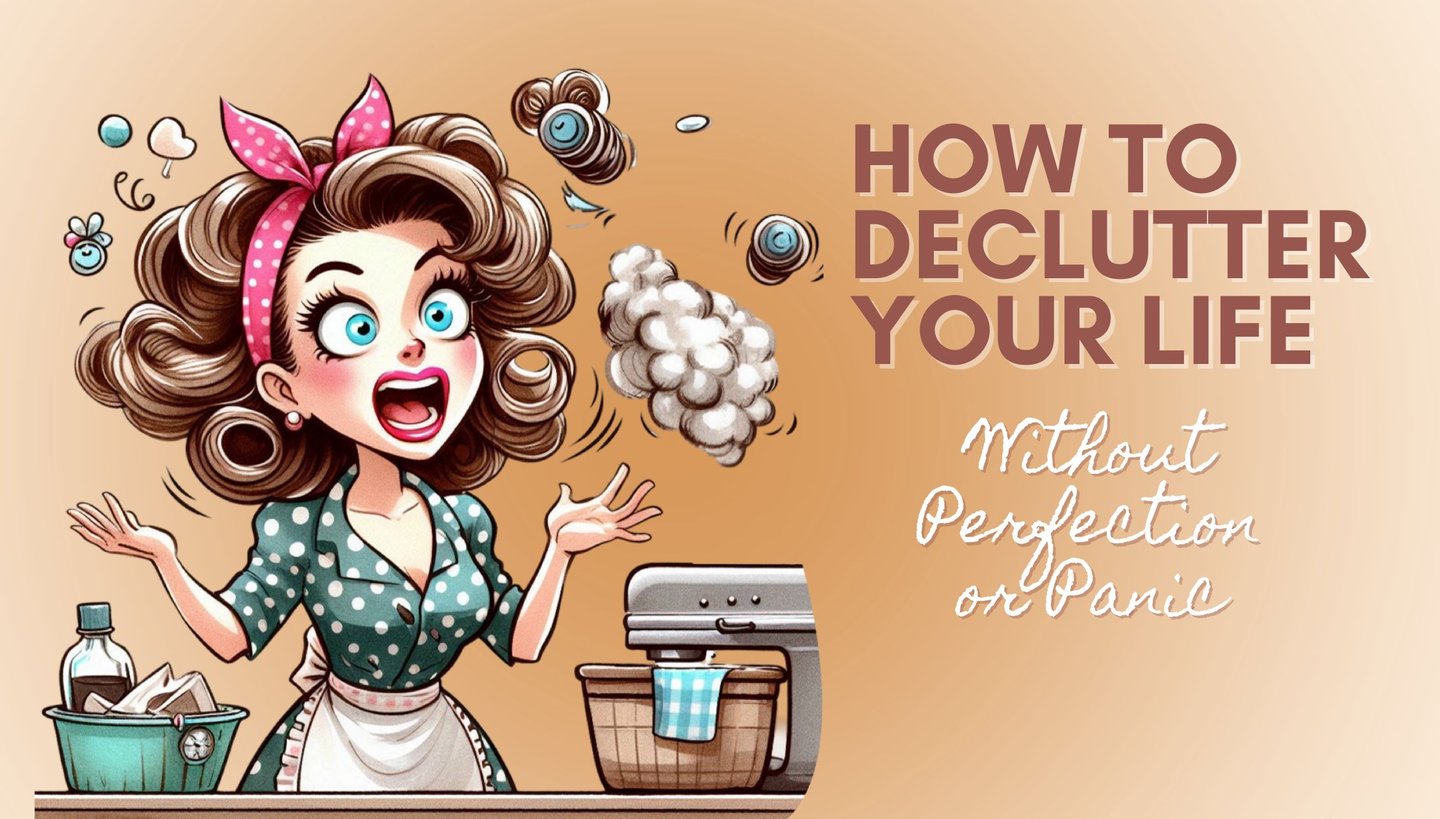
Have you ever stood in front of a crowded closet and still felt like you had nothing to wear? Or opened a kitchen drawer that jams halfway, because it’s stuffed with gadgets you forgot you owned?
Even your phone can feel like a junk drawer, full of unread texts, random screenshots, and photos you’ll never look at again.
These everyday frustrations highlight the need to simplify your life.
How to declutter your life isn’t just about having a nicer-looking home. Clutter has a way of sneaking into your energy, your time, and your patience, affecting your well-being. It adds tiny decisions to your day until you feel worn down before lunch.
There’s also a surprising emotional side to excess stuff: guilt, identity, “someday” thinking, and the fear of being wasteful. And then there’s the quiet money leak: rebuying what you can’t find, paying late fees because paperwork is lost, buying organizers instead of fixing the real issue, impulse shopping because you’re stressed.
This post gives you a simple, realistic path to declutter without trying to become a different person overnight. No perfection required, just calmer days that reduce stress and smarter spending.
Start with your “why”, what clutter is really costing you
Decluttering isn’t cleaning. Cleaning is wiping and putting things back. Decluttering is choosing what earns a place in your life.
If you’ve ever thought, “I should be able to manage this,” pause right there. Clutter isn’t a character flaw. It’s often a mix of busy seasons, emotional attachment, and a home that’s doing too many jobs at once (office, school, storage unit, landing pad).
Here’s the mindset shift that changes everything and delivers psychological freedom: you’re not getting rid of your life, you’re choosing what stays. You’re making space for the version of life you actually live, not the one you keep promising you’ll start “someday.”
The emotional weight of stuff (guilt, grief, and the “future you” fantasy)
Most clutter isn’t hard because of the objects. It’s hard because of what they represent.
Gifts can feel like obligations. You keep the sweater because Aunt Linda gave it to you, not because you’d ever wear it.
Unused purchases can trigger shame. That planner, that hobby kit, that pricey skin-care set, all whisper, “Why did you buy me?”
Some items carry grief. Baby clothes, a parent’s jewelry, old photos, reminders of a relationship, reminders of who you used to be.
Your fantasy self gets her own storage space. Goal-size jeans, shoes for events you don’t attend, the fancy serving platter for the dinner parties you imagine hosting.
If any of that hit a nerve, you’re normal.
A gentle reframe helps: appreciate the memory, keep the lesson, release the item. The gratitude doesn’t disappear when the object leaves. The love was never trapped in the sweater.
A personal truth many of us don’t say out loud: we often buy things to feel like a certain kind of woman. The organized woman with matching containers. The stylish woman with the perfect wardrobe. The successful woman with the right bag, the right shoes, the “put-together” life.
Consumer culture sells identity in bite-size purchases. Decluttering is one way to stop outsourcing your confidence to stuff.
The money drain you do not see (rebuying, storage, and impulse spending)
Clutter costs money in ways that don’t show up as one big charge. It’s a drip, drip, drip.
Common examples:
Buying duplicates because you can’t find what you already own (scissors, tape, phone chargers, basic tees).
Pantry waste from expired food, “backup” items, and half-used ingredients buried in the back.
Subscriptions you forgot about because your inbox is a mess.
Storage bins, labels, and organizers that feel productive but often just repackage clutter.
Credit card interest from stress shopping or “sale” buys that weren’t needed.
Late fees because bills and paperwork disappear into piles.
A quick exercise (2 minutes): pick one clutter category, like makeup, leggings, coffee mugs, toys, or pantry snacks. Estimate what you spent in the last year on duplicates, replacements, or “close enough” buys because the area felt out of control.
You don’t need an exact number. You just need a honest one. That number is part of your “why.”
How to declutter your life with a simple plan that actually sticks
The goal isn’t to do it all. The goal is to finish what you start.
A plan that sticks has three parts: small sessions, clear categories, and a finish line for each round. That’s how you avoid the classic trap: pulling everything out, making a bigger mess, then giving up because you’re exhausted.
If you’re busy, start with 15 minutes. If you’re already overwhelmed, start with one drawer. Progress counts even when it’s not dramatic.
Set your rules before you touch a thing (time limit, trash bag, donation box)
Decision fatigue is real. So set your rules while you still feel fresh.
A simple setup checklist:
A 15 to 30-minute timer
A trash bag
A donation box or bag
A “relocate” bin (items that belong elsewhere)
One cleaning wipe or a damp cloth
One boundary that saves money: don’t buy organizing products until after decluttering. Otherwise, you’ll spend to store what you don’t even want.
A realistic weekly rhythm:
Two short sessions on weekdays (like Tuesday and Thursday), or
One focused session on Sunday
Keep it boring. Boring is repeatable.
Use the 3 question test for every item (use it, love it, would I buy it again?)
When you’re staring at a pile, your brain wants escape. Give it a simple script.
For each item, ask:
Do I use it? If you haven’t used it in a year (or a season, for seasonal items), it’s a clue.
Do I love it? Not “it’s fine.” Love means you’d choose it again on purpose.
Would I buy it again today? If the answer is no, that’s information.
What the answers mean:
Yes to at least two questions usually means “keep.”
No to all three usually means “let it go.”
Mixed answers mean it’s a “maybe,” but you need a tie-breaker.
Tie-breaker for hard items: if it costs less than a set amount (choose your number, many people pick $20) and it’s easy to replace, let it go. The space you get back is worth more than the item.
For sentimental things you don’t want to store, take a quick photo. Keep the memory, skip the box.
Try minimalist rules that make decisions faster (one in, one out; the container rule)
Rules aren’t strict. They’re relief. They stop you from negotiating with yourself every time.
One in, one out: When something new comes in, something old leaves. Example: buy a new lipstick, toss one you never reach for. Bring home a new mug, donate one.
The container rule: Your space is the limit. The drawer, shelf, or bin decides how much you keep. Example: if your makeup fits in one bag, anything that doesn’t fit has to go. If kids’ art fits in one box, you keep the favorites.
The maybe box (with a date): Put hard decisions in a box, seal it, and label a date 30 days out. If you don’t open it, donate it. If you do open it, you’ve learned what you actually missed.
One mindful spending rule to prevent rebound clutter: wait 24 hours before buying non-essentials. Then check what you already own. Stress shopping fades fast when you give it a day.
Declutter the areas that create the most daily stress first
Some clutter is annoying. Other clutter steals your time every single day. Start where you feel it the most.
High-impact zones usually include the closet, bedroom surfaces, kitchen counters, and your phone. These areas affect mornings, meals, and your ability to think clearly.
The key is to work in small, finishable slices. One drawer. One shelf. One category. Finish, reset, and stop. That’s how you avoid the “my whole house exploded” problem.
Closet and bedroom, make getting dressed easy again
Getting dressed shouldn’t feel like a daily argument with your closet.
A simple method that works:
Choose one zone (one drawer, one shelf, one section of hanging clothes).
Pull out only that zone.
Sort into four piles: keep, donate, trash, tailor.
Common sticking points:
Goal-size clothing: It can turn your closet into a pressure cooker. A gentle guideline is to keep what fits your life in the next 3 months. If you love the item and it’s high quality, you can keep a small, limited “later” section. Limit is the key.
Special occasion items: If you haven’t worn it in two years and you wouldn’t buy it today, it’s probably not serving you.
A trick that lowers morning stress: create a small “favorite outfits” section. It can be 5 to 10 pieces you truly like wearing right now. Think of it as your personal greatest hits.
When you dress from favorites, you stop treating your closet like a warehouse.
Kitchen and pantry, stop wasting food and rebuying duplicates
Kitchen clutter hits twice: it stresses you out and it wastes money.
Start with what goes bad first: pantry and fridge items that expire. Then move to duplicates (three spatulas, five travel mugs, a cabinet full of mismatched containers with missing lids).
Try a quick category reset. Pick one category at a time:
Spices (toss expired, keep what you use)
Snacks (pull everything out, group it, check dates)
Canned goods (line up by type)
Water bottles and tumblers (keep the ones you grab)
Food storage (match lids, donate extras)
One money-saving habit: keep a running list on your phone of what you already have (rice, pasta, broth, your go-to spices). Check it before shopping.
Then do one “use what you own” week each month. It’s like a pantry clean-out, but it can feel weirdly satisfying, like finding money in a coat pocket.
Digital clutter, clean up your phone, inbox, and social feeds
Digital clutter still takes up space, just in your head.
If your phone feels chaotic, your brain never fully rests. Every extra app badge and notification is a tiny tug on your attention.
A simple routine that doesn’t take over your life:
Delete 20 photos a day (start with screenshots).
Unsubscribe from 5 emails a day (or a few times a week).
Turn off non-essential notifications (especially shopping apps).
Create 3 core folders on your phone (for example: Family, Finance, Health). Put your most used apps where you can find them fast.
Also consider your social feeds. If you follow accounts that make you feel behind, spendy, or not enough, unfollow. You’re allowed to protect your attention.
Drowning in Clutter? Transform Your Entire Home in Just 30 Days
Spend just 15-30 minutes a day and finally create the organized, peaceful space you've been dreaming of
FREE
30-Day Home Reset Challenge
Keep it clutter-free, build habits that protect your time, space, and budget
Decluttering feels great. Keeping it that way is where the real freedom is.
This part isn’t about strict rules. It’s about small habits that stop clutter before it spreads. When you have a few simple systems, you don’t need big clean-outs as often.
Create a weekly reset and a “drop zone” so mess does not spread
Most clutter starts as a pile with no home. Give it one.
Set up a simple drop zone for keys, bags, and mail. It can be a basket, a tray, or one drawer near the door.
Two resets that work for busy weeks:
A 10-minute nightly reset: clear kitchen counters, put shoes away, toss trash, return items to their rooms.
A 30-minute weekly reset: empty the relocate bin, take donations to your car, quick sweep of the main surfaces.
Paper clutter has its own rules. Try this:
Open mail right away.
Recycle junk immediately.
Keep one folder for “action” items (bills, forms, school papers). If it can’t fit, you have too much paper.
Spend with intention so clutter does not come back (pause, plan, and track)
The most powerful way to stay clutter-free is to change what comes into your home.
A simple approach you can actually stick to:
Pause: use the 24-hour rule for non-essentials.
Plan: keep a running wish list, not a cart full of impulse buys.
Track: set a monthly “stuff budget” (even a small one). When it’s spent, it’s spent.
Choose quality over quantity when it matters, like shoes you wear weekly or a coat you live in for months. And for everything else, remember that “on sale” isn’t a deal if it becomes clutter.
Buy for the life you live, not the life you’re trying to prove.
One practical money tip: check return windows the day you buy. Set a phone reminder for 7 days before the deadline. Returns are a form of decluttering too.
Conclusion
Decluttering is about space, peace, and freedom, not perfect counters or empty shelves. When you learn how to declutter your life with simple rules and small sessions, you get less stress, fewer impulse buys, and easier mornings that don’t start with a scavenger hunt.
Pick one small area today. Set a 20-minute timer, grab a donation bag, and use the 3 question test. Then stop when the timer ends, even if it’s not “done.”
As the year winds down, choose how you want your home and life to feel in the new year. Let that feeling guide what stays.