
Couple Poses for Pictures That Feel Natural
Try Couple Poses for Pictures That Feel Natural for simple tips that help you look close, relaxed, and ready for the camera.
LIFESTYLE INSPIRATION
Shari Smith
1/26/202610 min read
As an Amazon affiliate, we earn commissions at no extra cost to you if you click our links and make a purchase.
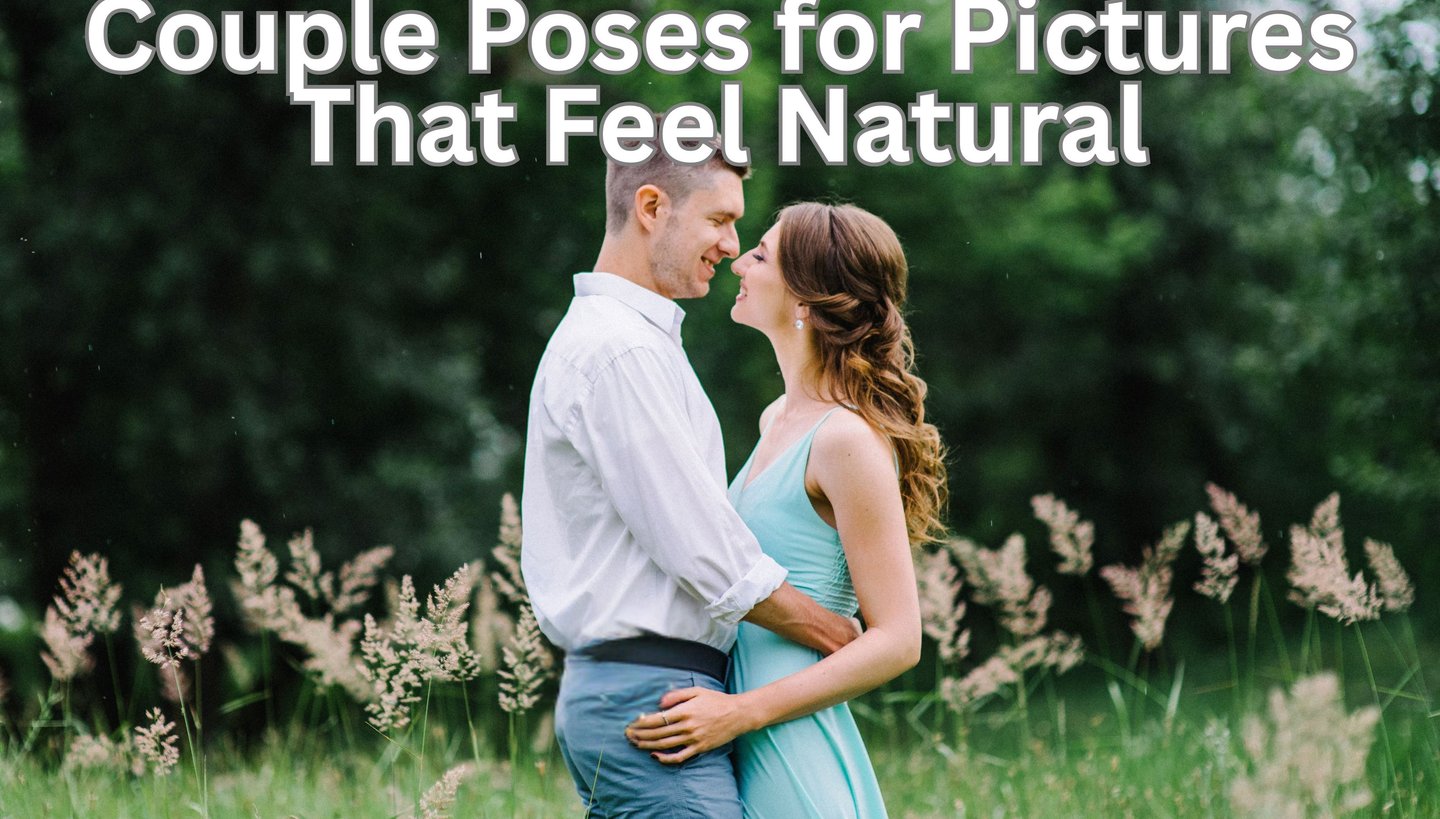
Great couple photos aren't built on perfect posing. They're built on comfort, connection, and those small in-between movements that make two people look like themselves.
If you freeze when a camera comes out, you're not doing anything wrong. A few easy couple poses for pictures, plus better posture, hand placement, and movement, can turn stiff shots into photos that feel warm and real.
Once you know what makes a pose look natural, the rest gets much easier.
What makes couple poses look natural in photos?
Natural-looking photos usually don't come from standing still and smiling on command. They come from giving the couple room to breathe, react, and pay attention to each other instead of the camera every second.
The best poses for couples in photos are often simple. A small lean, a soft touch, or a half-step closer can do more than a complicated setup ever will.


Use body language that feels relaxed, not forced
Start with the shoulders. Let them drop. Unlock the knees. Keep your hands loose instead of pressing them flat against a hip or chest. Nobody wants hands that look glued on.
Then lean slightly toward each other. Not enough to look off-balance, just enough to close the space. That little shift reads as closeness right away.
Hands matter more than people think. Even small fixes can clean up a frame, and these posing do's and don'ts show how much a tiny hand adjustment can change the result.
Let your faces show real emotion
Your faces carry the mood of the photo. A soft smile works. So does a calm expression, a laugh, or that quick grin after one of you says something dumb. You don't need to grin in every frame.
Try mixing where you look. Take one photo looking at each other, one looking at the camera, and one where both of you look away. That gives you variety without changing the pose much.
Keep movement small and simple
Stillness can look formal, which is fine sometimes. But small movement usually feels more alive. Walk a few slow steps. Turn your shoulders. Adjust a jacket. Brush hair off a cheek. Pull your partner a little closer.
Easy couple poses for pictures that always work
Some poses work almost anywhere because they don't ask much from the couple. They're easy to follow, flattering on camera, and flexible enough to feel romantic, playful, or laid-back.
These are the ones people come back to because they look polished without feeling over-rehearsed.
The gentle forehead touch
This pose is soft, close, and hard to mess up. Stand chest-to-chest or slightly angled. Bring your foreheads together lightly, then relax your mouths and breathe.
It works especially well for close-up portraits. Keep the pressure light. A gentle touch looks tender. Too much pressure looks like you're trying to hold each other upright.
Walking hand in hand
Walking hand in hand is one of the safest poses outdoors. It gives your arms a job and your feet a reason to move. Long steps can look rushed, so keep the pace easy.
Talk while you walk. Bump shoulders. Look at each other, then ahead. The point isn't a perfect stride. It's the feeling of getting somewhere together.
The back hug with a smile
A back hug feels warm without needing much direction. One person stands behind, wraps an arm around the waist or shoulders, and both stay loose through the neck and jaw.
You can look at the camera for a classic frame, or turn toward each other for something sweeter. Keep the chin slightly lifted so necks don't disappear. A small smile goes a long way here.
Sitting close together on a bench, blanket, or steps
Seated poses are great when standing feels awkward. Sit with your hips angled in, let knees or shoulders touch, and keep one arm around the other if it feels natural.
A head resting on a shoulder works well. So does one hand on a leg or knee. Sitting gives your hands a place to go, which makes the whole pose feel calmer.
A playful twirl or spin
A twirl adds energy fast. Keep it small and simple. One person leads, the other turns once, and both stay connected through eye contact or touch.
The best frame often happens right before or right after the spin. That's when people laugh, catch their balance, and forget to pose. If a pose feels like furniture assembly, it's too complicated.

How to choose poses based on your setting
Location changes what will look good. A pose that feels open and easy on a beach can look cramped in a small living room. When the setting and the pose match, the photo makes more sense right away.
That doesn't mean you need a different personality for every place. You just need to use the space you have.
Outdoor photos: parks, beaches, and city streets
Outdoor spaces give you room to move, and that helps a lot. Walk through the frame. Lean on a railing. Sit on a curb. Pause and look into the distance together. Wind, light, and open backgrounds make candid pauses look good.
Outdoor sessions also give photographers more room to frame wide and shoot from different angles. In this thread on posing non-model couples, photographers keep landing on the same point: give people something simple to do instead of telling them to "act natural."
Indoor photos: home, studio, and cozy spaces
Indoor sessions usually call for closer poses. Space is tighter, backgrounds are busier, and the mood often feels more personal. Closer framing helps.
Sit on a couch with your legs turned toward each other. Stand by a window and let one person tuck into the other's shoulder or chest. A chair, blanket, bed, or kitchen counter can help the pose feel lived-in instead of staged.
Seasonal and special occasion photos
The reason for the shoot matters too. Holiday photos often need a cleaner shot where both people can look at the camera. Engagement sessions can handle more closeness and softer expressions. Anniversary photos usually look best when they feel familiar and easy.
Weather changes things as well. In cold months, compact poses look better because people are already hunching a little. In summer, walking shots and looser movement usually feel more natural.
Simple posing tips that help every couple look better on camera
Once you have a pose, small adjustments can make it stronger. These are the little fixes that improve almost any photo without making the couple feel over-directed.
Most of them take one second to do. That's why they matter.
Create shape by separating the body slightly
Bodies look flatter when arms are pressed tight to the sides or torsos are stacked straight on. Create a little space instead. Bend an elbow. Shift one knee forward. Let a hand rest lightly.
Those small gaps add shape. They also stop the pose from turning into one solid block.
Angle the body instead of facing the camera straight on
Facing the camera head-on can work, but it often looks stiff. Turn both bodies slightly. Even a small angle creates better lines through the shoulders, waist, and legs.
It also makes connection easier. People naturally turn toward each other when they aren't planted flat like yearbook portraits.
Use hands with purpose
Hands are where awkwardness shows up first. Give them a job. Hold a face. Rest a hand on a shoulder. Link fingers. Touch a lapel. Place a hand at the waist.
Avoid hands hanging with no purpose. If a hand looks unsure, the whole pose looks unsure.
Mix posed shots with candid moments
Take the clean posed photo first. Then stay there for another few seconds. Talk, laugh, sway, look away, or nudge each other.
Those in-between frames often beat the planned one. They give you structure and spontaneity in the same set, which is why the best couple poses for pictures rarely stop at one frozen expression.
The photos people keep are the easy ones
The best couple photos don't ask you to become models. They ask you to relax, get close, and do a few simple things well. That's why strong photos come from easy body language, soft emotion, and a little movement.
Start with one or two poses that feel natural, then let the moment breathe. A camera catches tension fast, but it also catches connection fast, and that's the part people remember.